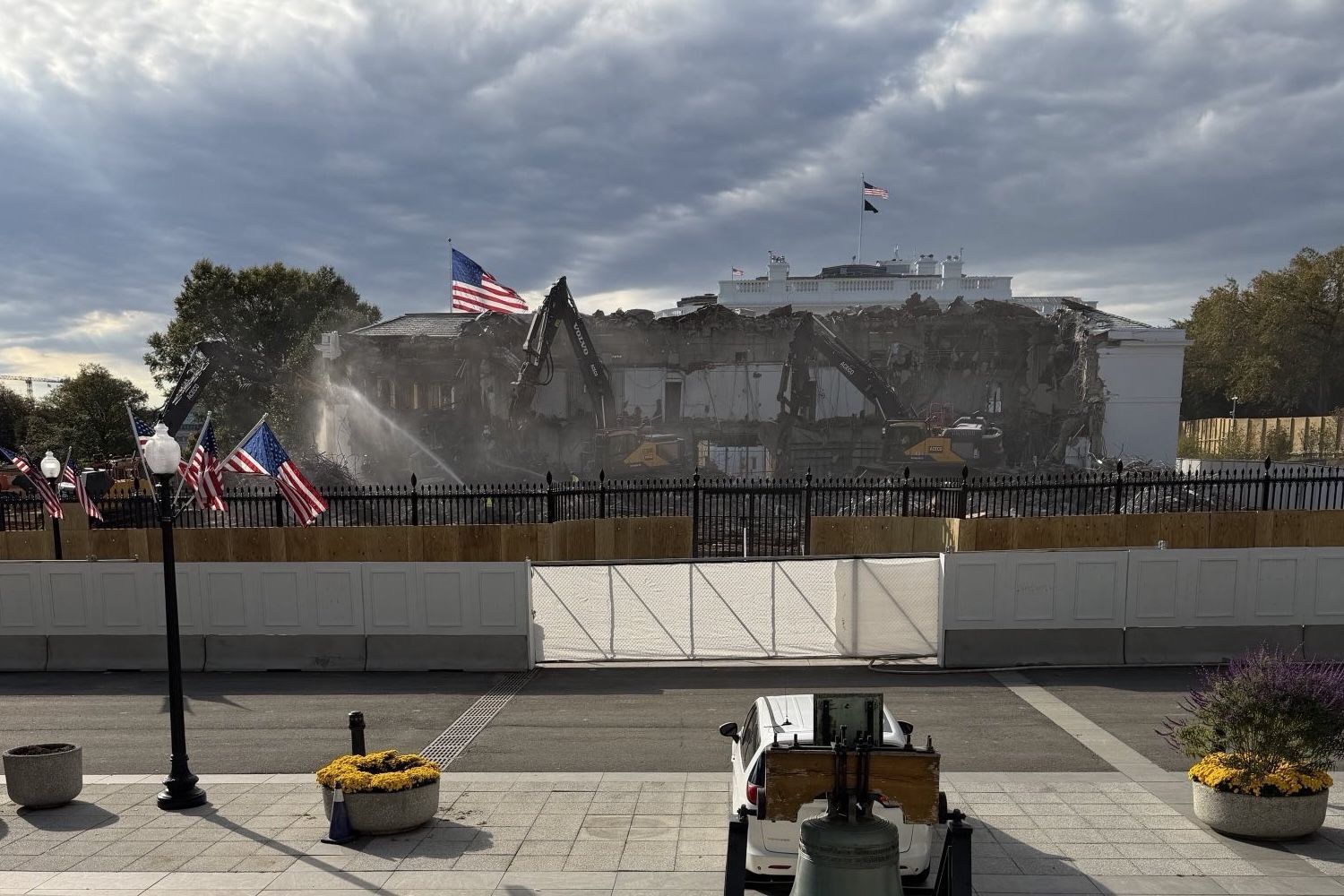
If enacted, the lame-duck industrial-expediting bill BAAJA (S. 5653) will provide blanket permission for Trump’s destructive wishes in our nation’s capital. In BAAJA Follies, Hill Heat reviews several of the major legal battles against that takeover, and the implications of BAAJA’s possible passage during the lame-duck session.
National Trust for Historic Preservation v. National Park Service and NPS v. NTHP
With the East Ballroom, Trump is actively building a new, hardened military bunker in the White House, surmounted by a gaudy monument to himself. The Supreme Court killed a judicial stay on Trump’s illegal construction spree with the reasoning that historic preservationists can’t be harmed by the destruction of historical architecture, a ruling consistent with the text of BAAJA.
Over the course of a few days in October 2025, Trump contractors demolished the White House East Wing, illegally dumping thousands of cubic yards of debris in Hains Point, the site of the East Potomac Golf Course. The National Trust for Historic Preservation immediately brought suit against the construction of Trump’s ballroom under the National Capital Planning Act, the National Environmental Policy Act (NEPA), and the Administrative Procedure Act. In March, a district court judge issued an injunction against the ballroom, but an appeals court soon lifted that stay, allowing construction to proceed, but in August the full court agreed with the injunction, stopping construction again. On an emergency basis, the Supreme Court ruled in favor of Trump on August 31st by a vote of 5-4, overriding John Roberts and the liberal justices.
The right-wing ruling claimed the plaintiffs lacked standing, by finding that D.C. architectural historian Alison Hoagland would not be harmed in a concrete way by the destruction of the republican aesthetics of the People’s House. BAAJA’s radical restrictions of both standing and “adverse effects” parallel this ruling.
The strongest course of action for a potential Democratic Congress in January would be investigations with subpoenas of the ballroom donors, construction process, and ballroom blueprints. If the White House refused, they could immediately file suit and pursue a judicial stay on construction during the subpoena fight. Again, the passage of BAAJA in the lame duck would make fighting the illegal construction more difficult.