BAAJA Follies: The Kennedy Center

Posted by Brad Johnson on 11/03/2026 at 06:41PM

If enacted, the lame-duck industrial-expediting bill BAAJA (S. 5653) will provide blanket permission for Trump’s destructive wishes in our nation’s capital. In BAAJA Follies, Hill Heat reviews several of the major legal battles against that takeover, and the implications of BAAJA’s possible passage during the lame-duck session.

Beatty v. Trump and DC Preservation League v. Board of Trustees of the John F. Kennedy Center for the Performing Arts

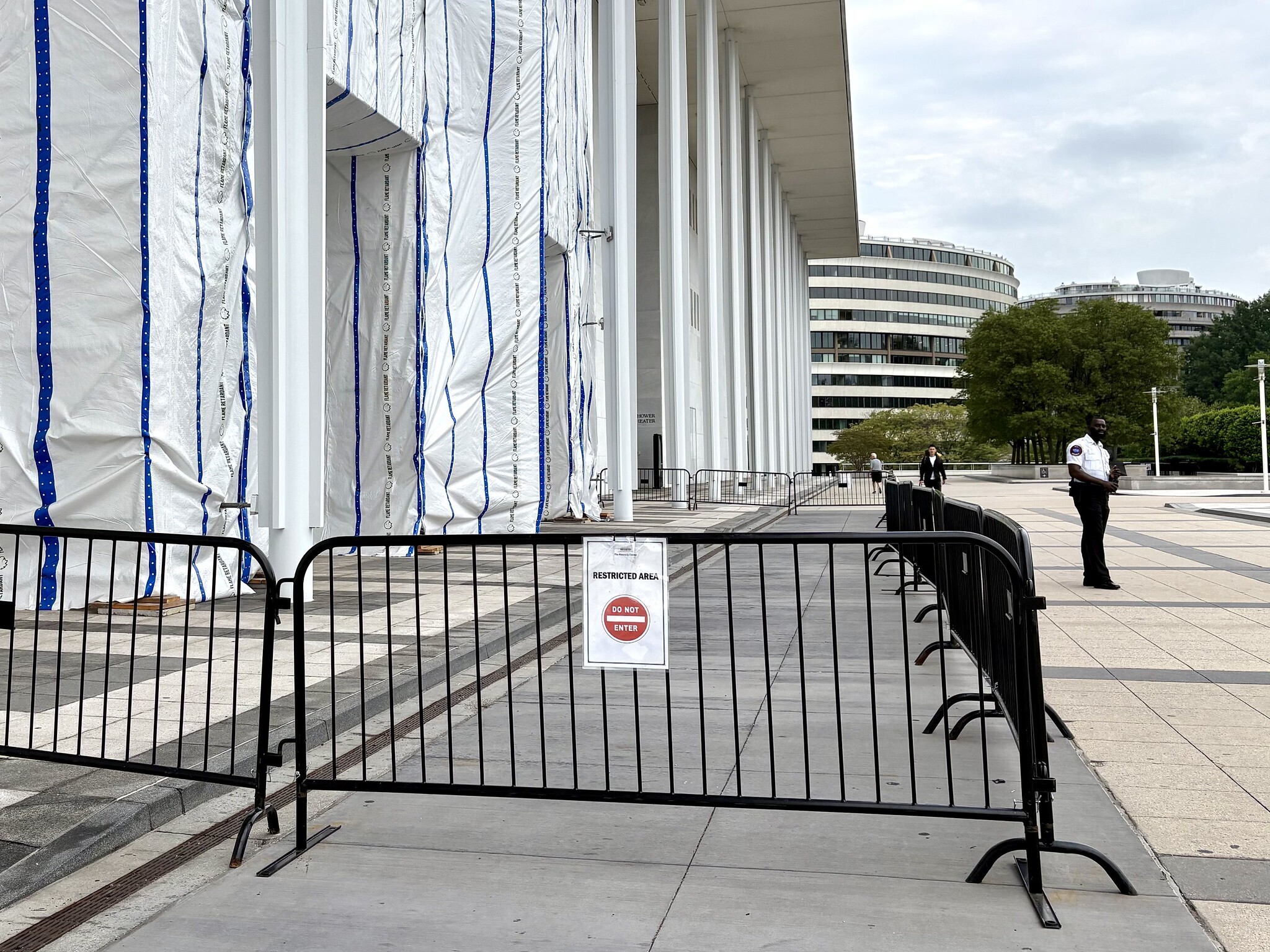
If BAAJA passes, the Trump regime will have dangerous new legal tools to permit the threatened demolition of the Kennedy Center.

There are two separate cases against Trump’s renaming and proposed demolition of the John F. Kennedy Center for the Performing Arts: trustee Rep. Joyce Beatty’s (D-Ohio) suit, and the DC Preservation League’s case, which are being coordinated but handled separately by Judge Christopher R. Cooper.

Beatty’s suit challenges the renaming of the center after Trump and its arbitrary closure, whereas the coalition of historic preservationists and architects led by the Preservation League seeks to stop Trump from “proceeding with any demolition, new construction, major reconstruction, major renovation, or major aesthetic transformation of the Kennedy Center buildings or grounds that exceeds statutory limits, circumvents mandatory federal review, or fails to comply with fundamental historic preservation and environmental laws.”

The Trump-picked board, with Trump as chair, has repeated voted to put Trump’s name on the building and close down the center. In May, when the judge ordered the name removed and the center reopened, the board relented on the name. But then the board voted again to put Trump’s name on the building and to close down the center, claiming it was in a state of extreme disrepair, so the judge issued another injunction in September against any renaming and ordered status reports on the purported repair effort while the center remains closed.

The DC Preservation League case would be severely weakened by BAAJA, as its first two and eighth counts rely on Section 106 of NHPA, and its third count on NEPA. Furthermore, the passage of BAAJA would greatly strengthen the Trump regime’s claim that the plaintiffs lack standing to sue.

BAAJA’s provisions would radically empower Trump to commence demolition without public consultation, under the guise of Congressionally appropriated renovations and repairs.

“Unless the NHPA provisions are fully removed from the permitting bill, the President will have virtually free rein to implement his pet projects in DC and nationwide, with no input from the public,” Greg Werkheiser, a lawyer representing the Preservation League, warned in a written interview with Hill Heat. Werkheiser questioned why Sen. Sheldon Whitehouse (D-R.I.), who has been investigating Trump’s corrupt mismanagement of the Kennedy Center, is now “gutting the law that slows him down.”
Tags: ,

BAAJA Follies: The Trump Arch

Posted by Brad Johnson on 10/28/2026 at 08:26PM

If enacted, the lame-duck industrial-expediting bill BAAJA (S. 5653) will provide blanket permission for Trump’s destructive wishes in our nation’s capital. In BAAJA Follies, Hill Heat reviews several of the major legal battles against that takeover, and the implications of BAAJA’s possible passage during the lame-duck session.

Lemmon v. Trump and County Board of Arlington v. NPS and District of Columbia v. NPS

If BAAJA passes, most of the legal avenues for opponents of the construction of the Trump arch will be narrowed or shut down.

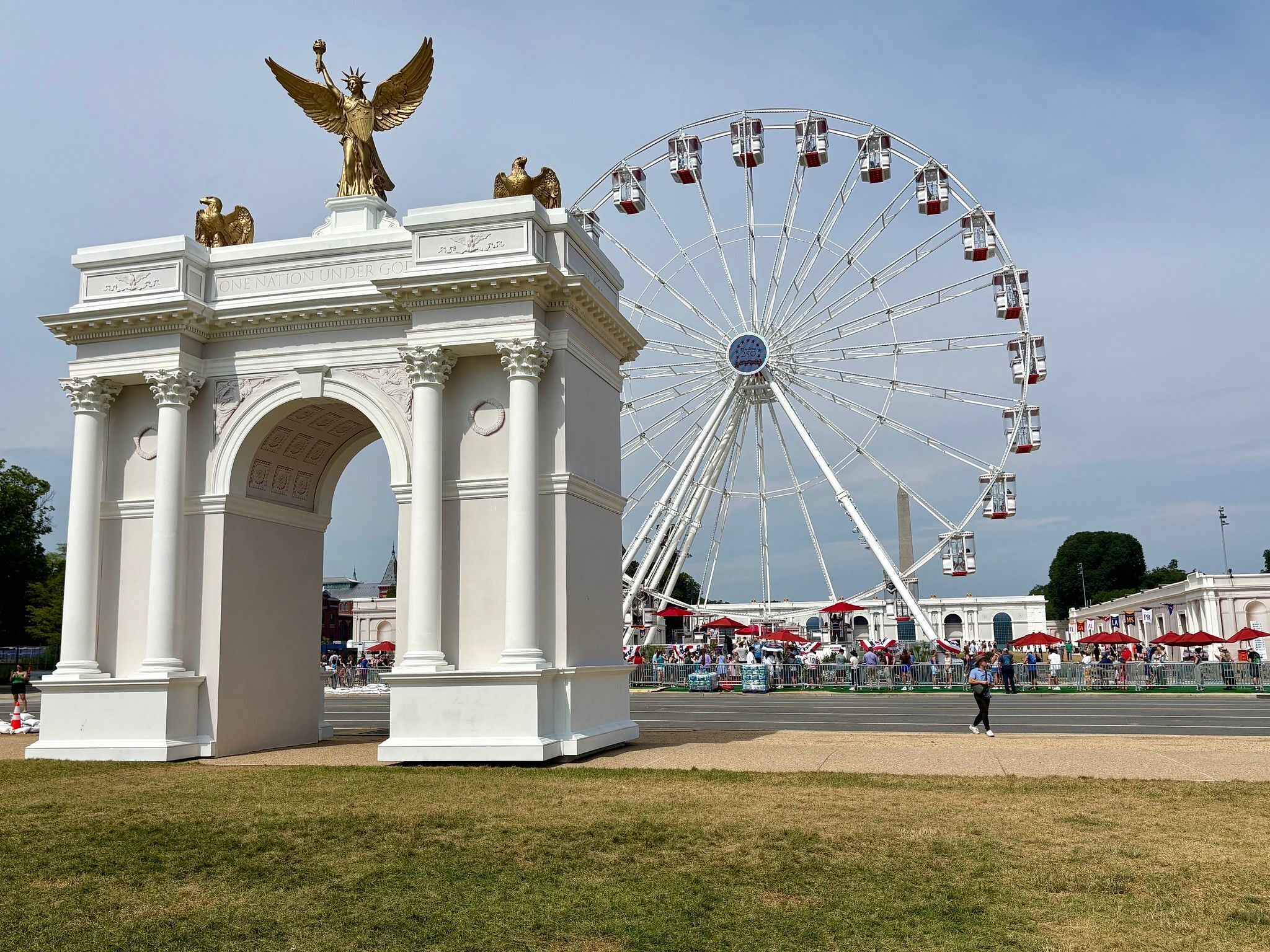
In October 2025, Trump announced his plans for a gargantuan and garish “triumphal arch” blocking the view of the Lincoln Memorial from Arlington National Cemetery. He has since announced it will also serve as a new, mechanized military outpost with drones and snipers, a claim confirmed in October 2026 in affadavits by Secretary of Homeland Security Markwayne Mullin and Secretary of Defense Pete Hegseth.

Represented by Public Citizen, three Vietnam veterans and an architectural historian brought suit in February against the arch’s construction, citing the Commemorative Works Act, NEPA, and the National Historic Preservation Act (NHPA).

In April, Trump’s CFA voted for the arch.

In June, the National Parks Service issued a rushed environmental impact assessment under NEPA, with a finding of “no significant impact”; they then avoided soliciting comment on the environmental assessment.

Also in June, they published an assessment of effect on historic sites under NHPA’s Section 106, finding dozens of adverse effects on the sanctity of those sites, but then invited only ten days of public comment. In July, they reopened twenty more days of public comment after complaints from the District of Columbia Historic Preservation Office and the Virginia Department of Historic Resources. In August, after receiving overwhelmingly negative comments, NPS issued a revised Section 106 statement finding even more adverse effects. In September, they issued a proposed historic-preservation agreement, admitting “adverse effects cannot be fully avoided” but that “the proposed location at Memorial Circle is central to the undertaking” and thus no alternative course of action could be considered.

Meanwhile, Secretary Burgum posted renderings of the arch and announced “excavation work” would begin mid-September, so plaintiffs filed for a restraining order, which was granted.

Sen. Martin Heinrich (D-N.M.)—as he was negotiating legislation to kill section 106 of the NHPA—led a September 22 letter to Interior Secretary Doug Burgum against the Arch, citing “section 106 of the National Historic Preservation Act,” which requires the government to “avoid, minimize, or mitigate” adverse harm to historic sites. The letter was co-signed by U.S. Senators Angus King (I-Maine), Alex Padilla (D-Calif.), Ron Wyden (D-Ore.), Mazie Hirono (D-Hawaii), and Chris Van Hollen (D-Md.).

Tags: ,

BAAJA Follies: Hains Point and East Potomac Park

Posted by Brad Johnson on 10/28/2026 at 08:00PM

If enacted, the lame-duck industrial-expediting bill BAAJA (S. 5653) will provide blanket permission for Trump’s destructive wishes in our nation’s capital. In BAAJA Follies, Hill Heat reviews several of the major legal battles against that takeover, and the implications of BAAJA’s possible passage during the lame-duck session.

DC Preservation League v. Interior

Trump has been pressing forward to replace D.C.‘s historically important public park on Hains Point with Trump-style golf course. The passage of BAAJA would likely eliminate all legal means of opposition to Trump’s Hains Point plans.

As mentioned above, the Trump regime used Hains Point as the illegal dumping ground for the East Wing demolition. In December, Trump killed the leases held by the National Links Trust for D.C.‘s public golf courses, and the Wall Street Journal revealed Trump and Burgum had secretly discussed remaking the East Potomac Golf Links on Hains Point. In February, the DC Preservation League brought suit, represented by Democracy Forward. In April, Burgum’s lawyers told Judge Ana Reyes no decisions had been made on renovating the park, but at the beginning of May, NOTUS reported that “landscaping, deferred maintenance and tree-clearing work in line with the National Park Service’s pre-approved plans” were about to begin. A hasty court meeting was called and the judge ordered the regime “not to cut down more than 10 trees without first notifying plaintiffs and getting court approval.” A few days later, Burgum publicly revealed the planned redesign of Hains Point.

Contractors cut down hundreds of trees in October, spurring an angry rebuke from the judge and a restraining order blocking all new tree-cutting, with demands for phones and documents as Trump’s lawyers say one thing in court and Trump says the opposite in public.

At the moment, Trump’s plans are being restrained. However, if Congress passes BAAJA, the illegal dumping, illegal plans, and illegal destruction of historic places will become legal. The plaintiffs’ entire case will collapse, giving Trump near-total power over the future of Hains Point and East Potomac Park.

“Historical preservation matters to me,” Save East Potomac’s Alex Rosen told Hill Heat in a phone interview. “Expanding executive power, especially under this administration, is fucking unbelievable.”

Save East Po is encouraging people across the nation to contact their members of Congress to stop BAAJA.

UPDATE Nov. 2: “A federal judge has already stepped in more than once to stop unlawful actions there, catching rushed paperwork and misleading claims from federal officials,” the D.C. Preservation League said in a statement to Politico. “That only works because courts can still meaningfully review agency action, and the public still has a real voice in the process. BAAJA would weaken both.”

Tags: ,

BAAJA Follies: The White House East Wing Ballroom Case

Posted by Brad Johnson on 10/28/2026 at 07:37PM

If enacted, the lame-duck industrial-expediting bill BAAJA (S. 5653) will provide blanket permission for Trump’s destructive wishes in our nation’s capital. In BAAJA Follies, Hill Heat reviews several of the major legal battles against that takeover, and the implications of BAAJA’s possible passage during the lame-duck session.

National Trust for Historic Preservation v. National Park Service and NPS v. NTHP

With the East Ballroom, Trump is actively building a new, hardened military bunker in the White House, surmounted by a gaudy monument to himself. The Supreme Court killed a judicial stay on Trump’s illegal construction spree with the reasoning that historic preservationists can’t be harmed by the destruction of historical architecture, a ruling consistent with the text of BAAJA.

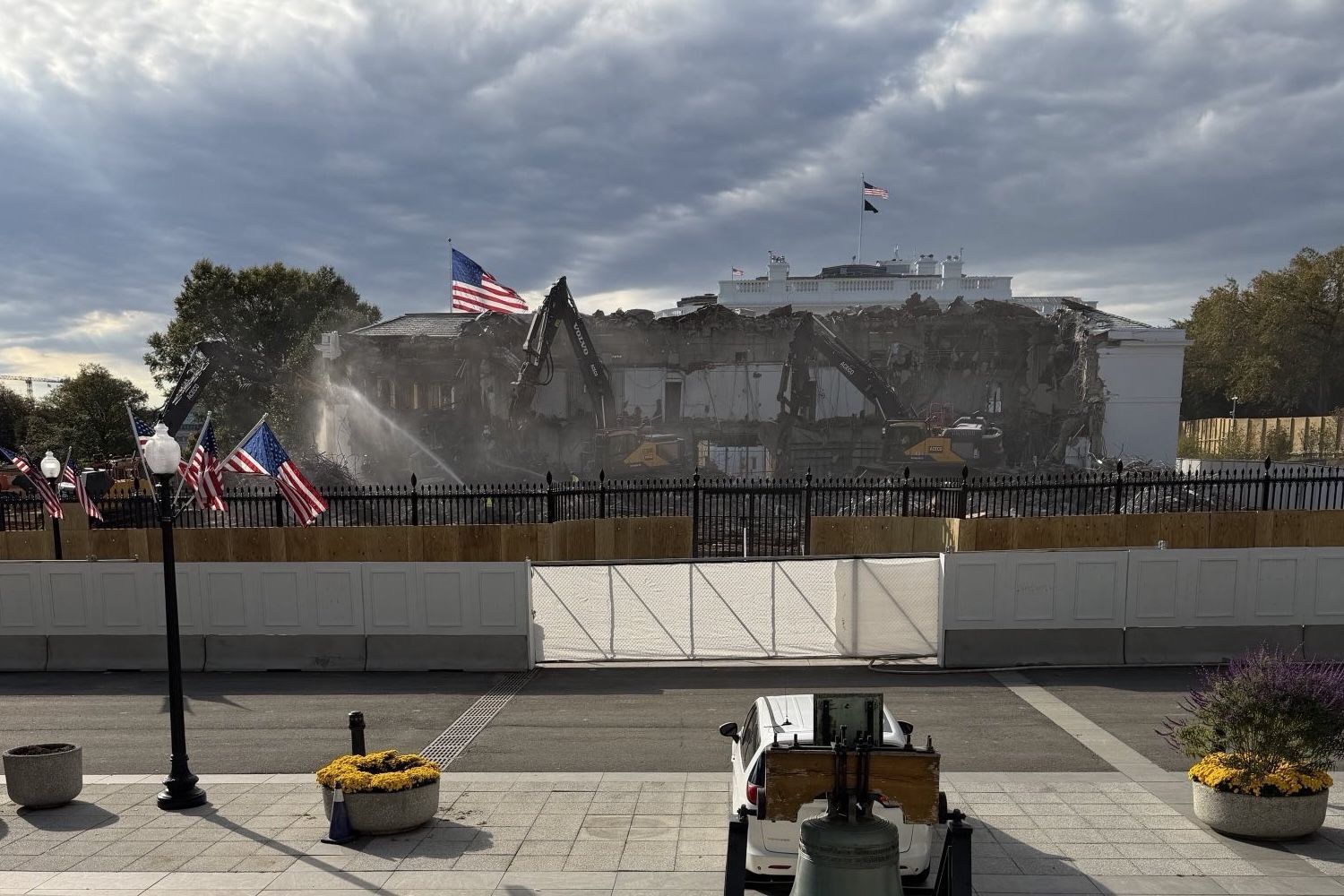
Over the course of a few days in October 2025, Trump contractors demolished the White House East Wing, illegally dumping thousands of cubic yards of debris in Hains Point, the site of the East Potomac Golf Course. The National Trust for Historic Preservation immediately brought suit against the construction of Trump’s ballroom under the National Capital Planning Act, the National Environmental Policy Act (NEPA), and the Administrative Procedure Act. In March, a district court judge issued an injunction against the ballroom, but an appeals court soon lifted that stay, allowing construction to proceed, but in August the full court agreed with the injunction, stopping construction again. On an emergency basis, the Supreme Court ruled in favor of Trump on August 31st by a vote of 5-4, overriding John Roberts and the liberal justices.

The right-wing ruling claimed the plaintiffs lacked standing, by finding that D.C. architectural historian Alison Hoagland would not be harmed in a concrete way by the destruction of the republican aesthetics of the People’s House. BAAJA’s radical restrictions of both standing and “adverse effects” parallel this ruling.

The strongest course of action for a potential Democratic Congress in January would be investigations with subpoenas of the ballroom donors, construction process, and ballroom blueprints. If the White House refused, they could immediately file suit and pursue a judicial stay on construction during the subpoena fight. Again, the passage of BAAJA in the lame duck would make fighting the illegal construction more difficult.

Tags: ,