What the Senate Permitting Bill Means for Our Land, Water, Wildlife, and Communities

Join the America the Beautiful For All coalition for a briefing and action session on the Senate industrial expediting bill (S. 5653) and the lame duck Congress.

Hear policy experts from across the coalition share what this bill would do, including what it would change for Tribal consultation, the Clean Water Act, endangered species, public lands, and our ocean. You’ll leave with insights on how we can make our collective action count in the weeks ahead.

Speakers:

  • Basia Marcks, PhD, Ocean Defense Initiative: Ocean and marine protection impacts
  • Charlie Thayer, National Congress of American Indians (NCAI): National Historic Preservation Act impacts
  • Daniel Cordalis, Native American Rights Fund (NARF): Tribal water protections and additional NHPA impacts
  • Dan Hartinger, The Wilderness Society: Public lands impacts
  • Jewel Tomasula, PhD, Endangered Species Coalition: Endangered Species Act impacts
  • Kristine Oblock, Clean Water for All: Clean Water Act impacts

RSVP

America the Beautiful for All
11/05/2026 at 04:00PM

Tags:

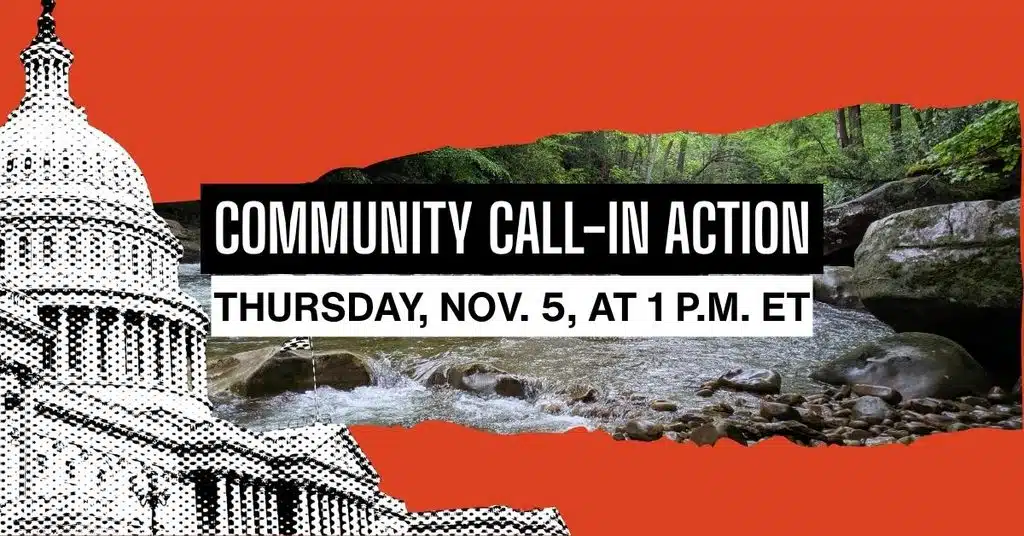
Community Call-In Action: Make your voice heard on Congress' new polluter giveaway

We all deserve clean water and a say in what happens in our own backyards. But Congress is fast-tracking a new bill that would severely weaken fundamental environmental laws including the Clean Water Act, the Endangered Species Act and the National Environmental Policy Act. Join us for a community call-in action webinar to learn how the so-called “Bipartisan American Affordability and Jobs Act” threatens our communities and how we can rally together to stop this devastating proposal.

RSVP

Appalachian Voices
11/05/2026 at 01:00PM

Tags:

Free DC Founder: 'BAAJA Is Dangerous'

Posted by Brad Johnson on 11/03/2026 at 10:43PM

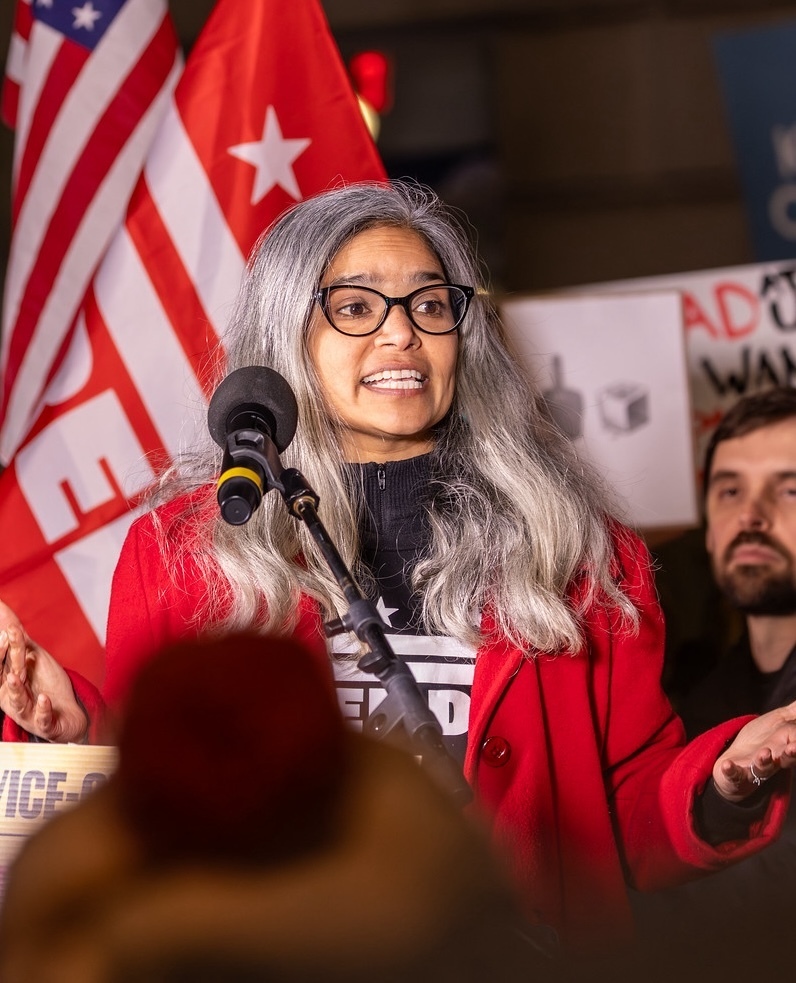
Free DC co-founder and executive director Keya Chatterjee warns that the industrial-expediting bill BAAJA (S. 5653) would give Trump more power to damage Washington D.C. and the rest of the nation.

“BAAJA is dangerous,” Chatterjee, an experienced climate justice activist, told Hill Heat in a written statement. “Trump just cut down hundreds of trees against a judge’s orders, wants drones and snipers in an arch pointed at where the March on Washington occurred, ran the Kennedy Center finances into the ground which made it shut down, made a mockery and a mess of the reflecting pool and the East Wing, and is egging on the data centers that are driving up electricity prices everywhere. Not a single senator should vote to remove guardrails that are preventing Trump from causing even more damage.”

Chatterjee’s warning about BAAJA’s threat to democracy and environmental justice agrees with other environmental and civil-rights experts and organizations, including Earthjustice president Abigail Dillen, the Detention Watch Network, the NAACP, and veteran climate attorney David Bookbinder.

Tags: ,

David Bookbinder: BAAJA Is 'A Serious Threat To American Democracy'

Posted by Brad Johnson on 11/03/2026 at 08:37PM

In a recent public letter, David Bookbinder, one of the nation’s most prominent centrist climate-law experts, described the Senate industrial-expediting bill BAAJA (S. 5653) as “a serious threat to democracy.”

Bookbinder, who has served as chief counsel for the center-right Niskanen Center and for the Sierra Club, and led an independent legal consultancy with former ExxonMobil climate policy manager David Bailey, summarized the legislation thusly:

On the one hand, it makes renewable energy permitting easier and significantly improves federal transmission policy. On the other hand, it makes fossil fuel infrastructure permitting even easier than it has already become, binds future administrations to the energy permitting policies of the Trump administration, seriously weakens the Clean Water Act, and effectively repeals the National Environmental Policy Act (NEPA) and the Endangered Species Act.

Although he finds fault in every title of the bill, Bookbinder is most concerned by Title IV, “Project Certainty,” which “beggars belief.”

“By placing corporations with any such federal permit not above the law so much as completely beyond its reach,” Bookbinder continued, “these ‘project certainty’ provisions seriously threaten American democracy.”

BAAJA effectively repeals the National Environmental Policy Act: “These measures will make NEPA review largely meaningless, but ultimately that won’t matter because the Bill adds a new judicial review provision making whatever is left of NEPA unenforceable.”

He writes about Section 1401 of BAAJA:

This effectively insulates not only the construction, but “the operation at full capacity” of all existing fossil fuel infrastructure from any future regulatory action of any sort. That means, for example, no increased stringency in federal environmental regulatory requirements under any statute – the Clean Air Act, the Clean Water Act, etc. can ever be applied to such projects. But it goes well beyond that – the clause barring the federal government from “tak[ing] any other action to interfere with or prevent” construction or operation means these facilities are immune from enforcement of any federal law that would “interfere with” the construction or “operation at full capacity” of any such infrastructure. (Nor is this provision limited to fossil fuel infrastructure; it applies just as well to steel mills, highways, etc.) In other words, a single federal permit or authorization under any one federal law effectively immunizes that project from adverse effects from changes in (1) that federal law; (2) any other federal environmental law; and (3) any federal law at all.

BAAJA Section 1106 provides a “disturbing” runaround of scientific information: “Allowing agencies to ignore scientific evidence while making decisions makes no sense whatsoever, and there is no imaginable rationale for this except as a means of limiting the amount of information an agency must consider.”

BAAJA requires the Trump Council on Environmental Quality to establish rules for an AI-run permitting system within 60 days: “This is a massive task, and the 60-day timeline means that the Trump CEQ has probably already prepared it. It is highly concerning that this CEQ will establish ‘data quality standards’ that will be used to exclude information this administration doesn’t like.”

BAAJA eliminates the Clean Water Act provision used by governors to stop the Jordan Cove LNG export terminal; PennEast natural gas pipeline; and the Northeast Supply Enhancement (NESE) Pipeline.

BAAJA’s extension from 5 to 10 years of certain Clean Water Act permits will “dramatically slow progress in reducing water pollution in states that take [effluent] permitting seriously.”

BAAJA “seriously weakens” the Endangered Species Act.

Section 1304 of BAAJA allows the federal government to transfer responsibilities of protecting an endangered species to any given state; “unless the state has a proven commitment to endangered species, that’s the end of the story.”

BAAJA effectively repeals the National Historic Preservation Act: the federal government “can wave a magic wand and decide to exempt any project from the NHPA and that decision is not reviewable in court.”

UPDATE 11/10: Bookbinder has reviewed the managers’ amendment:

The Managers’ Amendment (the “Substitute”) to the original The Bipartisan American Affordability and Jobs Act of 2026 does not change the conclusion that BAAJA would fundamentally reshape both federal law in general and federal environmental law in particular. BAAJA reforms regulation of the U.S. transmission grid, and its sponsors believe that the resulting greenhouse gas emissions reductions justify its other provisions. But the minimal GHG reductions those transmission reforms will produce are not worth the damage this bill would cause not only to our environmental statutes but to American democracy.

BAAJA still does violence to multiple legislative norms. It repeals two statutes while pretending only to amend them; severely weakens two others; openly instructs agencies to ignore scientific data; narrows standing to challenge agency actions; and creates the novel legal presumption that agency permit denials are unlawful . . . while keeping the presumption that issuance of permits are correct. But those are not the worst parts. BAAJA effectively immunizes any project with a federal permit from changes in any federal law, and then ensures that no agency would even attempt to apply such changes because the agency would be liable for billions of dollars in penalties if it failed to prove its action fell within one of the exceptions to this immunity. Finally, BAAJA locks in place the federal energy permitting policies of the last ten years, which will make it even more difficult for future administrations to effectively reduce GHG emissions.

He concludes: “BAAJA wreaks havoc with environmental laws, legislative norms and, by insulating countless projects from the reach of all federal laws, our democracy. It must be stopped.”

Download the full letter.
Tags:

BAAJA Follies: The Kennedy Center

Posted by Brad Johnson on 11/03/2026 at 06:41PM

If enacted, the lame-duck industrial-expediting bill BAAJA (S. 5653) will provide blanket permission for Trump’s destructive wishes in our nation’s capital. In BAAJA Follies, Hill Heat reviews several of the major legal battles against that takeover, and the implications of BAAJA’s possible passage during the lame-duck session.

Beatty v. Trump and DC Preservation League v. Board of Trustees of the John F. Kennedy Center for the Performing Arts

If BAAJA passes, the Trump regime will have dangerous new legal tools to permit the threatened demolition of the Kennedy Center.

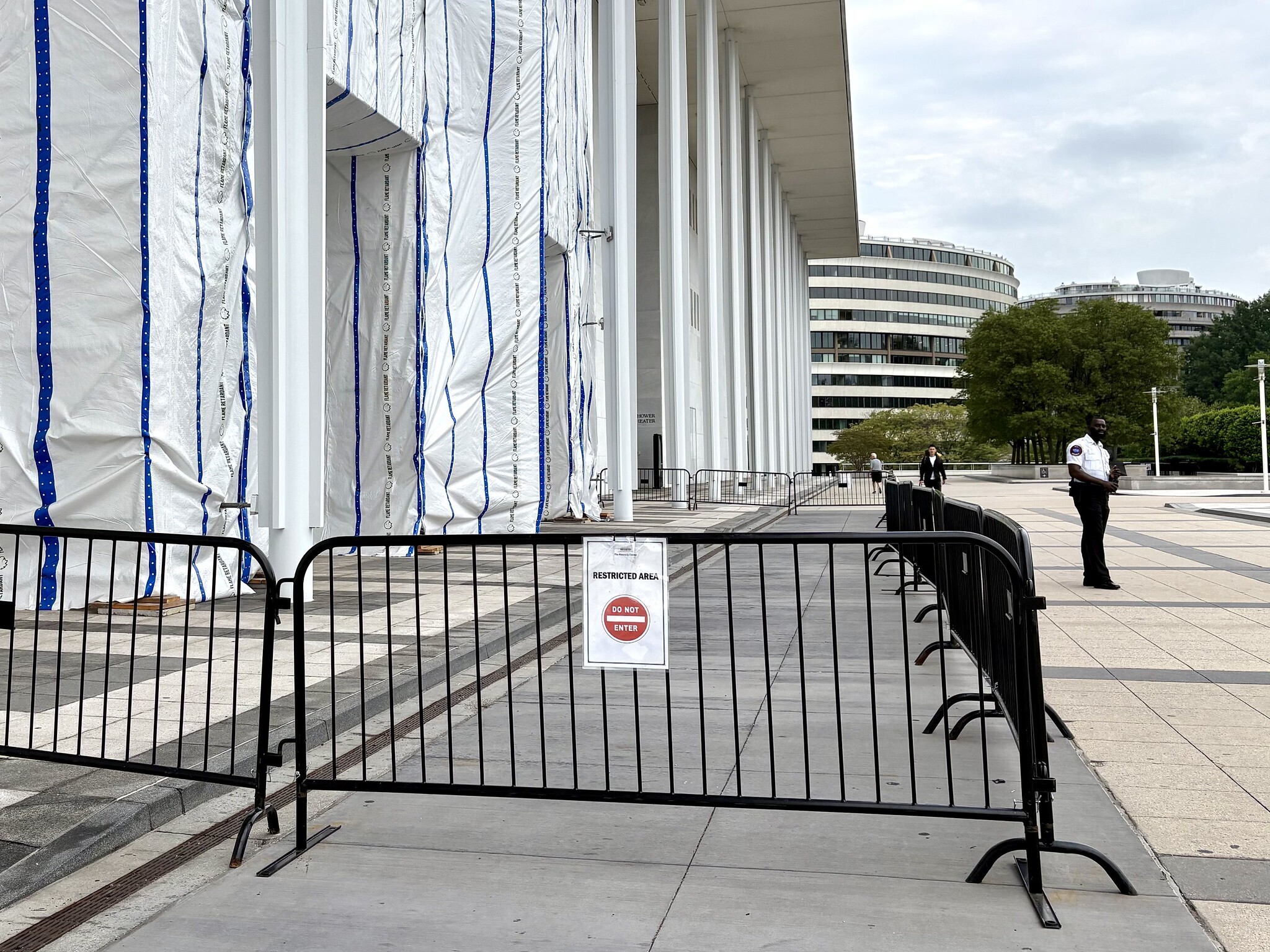
There are two separate cases against Trump’s renaming and proposed demolition of the John F. Kennedy Center for the Performing Arts: trustee Rep. Joyce Beatty’s (D-Ohio) suit, and the DC Preservation League’s case, which are being coordinated but handled separately by Judge Christopher R. Cooper.

Beatty’s suit challenges the renaming of the center after Trump and its arbitrary closure, whereas the coalition of historic preservationists and architects led by the Preservation League seeks to stop Trump from “proceeding with any demolition, new construction, major reconstruction, major renovation, or major aesthetic transformation of the Kennedy Center buildings or grounds that exceeds statutory limits, circumvents mandatory federal review, or fails to comply with fundamental historic preservation and environmental laws.”

The Trump-picked board, with Trump as chair, has repeated voted to put Trump’s name on the building and close down the center. In May, when the judge ordered the name removed and the center reopened, the board relented on the name. But then the board voted again to put Trump’s name on the building and to close down the center, claiming it was in a state of extreme disrepair, so the judge issued another injunction in September against any renaming and ordered status reports on the purported repair effort while the center remains closed.

The DC Preservation League case would be severely weakened by BAAJA, as its first two and eighth counts rely on Section 106 of NHPA, and its third count on NEPA. Furthermore, the passage of BAAJA would greatly strengthen the Trump regime’s claim that the plaintiffs lack standing to sue.

BAAJA’s provisions would radically empower Trump to commence demolition without public consultation, under the guise of Congressionally appropriated renovations and repairs.

“Unless the NHPA provisions are fully removed from the permitting bill, the President will have virtually free rein to implement his pet projects in DC and nationwide, with no input from the public,” Greg Werkheiser, a lawyer representing the Preservation League, warned in a written interview with Hill Heat. Werkheiser questioned why Sen. Sheldon Whitehouse (D-R.I.), who has been investigating Trump’s corrupt mismanagement of the Kennedy Center, is now “gutting the law that slows him down.”

Tags: ,

BAAJA Would Accelerate ICE’s Expansion of Deadly, Dangerous Detention

Posted by Brad Johnson on 11/02/2026 at 07:38PM

As written, S. 5653 (BAAJA) would hamper, if not altogether thwart, critical work by civil rights organizations to halt U.S. Immigration and Customs Enforcement’s (ICE) dangerous expansion of immigrant detention, the Detention Watch Network warned today. It would, instead, accelerate ICE’s deadly warehousing of Americans.

The Detention Watch Network is a national coalition fighting to end immigrant detention, and ICE’s inability to respect laws protecting nature from industrial destruction has allowed the network to stop their rapid conversion of warehouses into detention camps, which is backed by $45 billion from the One Big Brutal Bill Act (OBBBA).

“The lack of environmental review provided the essential basis for states and communities across the country to challenge ICE’s plans, resulting in NEPA lawsuits filed by the states of Arizona, Maryland, Michigan, and New Jersey; and cities in Texas, Georgia, and Utah,” explains the network. “In April, the state of Maryland won a preliminary injunction blocking ICE from proceeding with construction because of the lack of compliance with NEPA. As a direct result of that victory and others in similar lawsuits, ICE’s plans in Maryland and other states quickly stalled.”

However, if BAAJA passes, those laws limiting industrial construction would be effectively eliminated and the warehousing will recommence.

“In the future, ICE could proceed with massive, irreversible projects like the warehouse detention expansion project with little oversight and no meaningful legal recourse,” the network writes.

“If NEPA becomes utterly toothless, as it would under BAAJA,” Earthjustice president Abigail Dillen earlier criticized, “I wonder how state Attorneys General and our lawyers at Earthjustice could stop ICE from detaining thousands of people in Amazon-style warehouses as we have so far been able to do.”

UPDATE 11/4: Detention Watch Network has launched a letter campaign calling on Congress “to oppose BAAJA as written and protect communities’ ability to stop detention expansion.”

UPDATE 11/6: 48 immigrant and human rights organizations, including Detention Watch Network, Indivisible, the National Education Association, the National Immigration Project, and Union for Reform Judaism have written to Congress to warn:

As the Trump administration moves full steam ahead on its anti-immigrant, mass detention and deportation agenda, this bill would pave that path by making immigration detention facilities easier to build and much harder to stop. It would undermine years of work by organizations across the country to protect communities and resist detention expansion, weakening the tools we use to hold immigration agencies accountable.

Read the letter

Tags:

Hains Point Halloween Hoopla

Join us to Protect the Point with a Halloween twist!

Hains Point Hoopla 4.0

Tree stumps and buzzsaws, expensive golf, no space for running, biking, picnics, or fishing. Spooky, right? That’s not the future we envision for our beloved East Potomac Park. Hains Point is threatened by Trump and by Congress, which is planning to pass BAAJA to kill the public’s ability to stop Trump’s plans.

Join us for yet another Hains Point Hoopla with a special Halloween-twist to scream for protections for East Potomac Park. Costumes encouraged!

Come to hear the latest news from the lawsuit to protect East Potomac Park and to celebrate the Hains Point community at Hains Point Hoopla 4.0 on Saturday, October 31st at 10 am. (Meet for a bike/run parade with DC Activist Street Band at 9:30 at Smithsonian Metro near Independence Ave!)

Part 1: 9:30am – Slow Roll to Hains Point with the DC Activist Street Band [optional]. Meet at Smithsonian Metro near Independence Ave. From there, the group will bike or run with the DC Activist Street Band about 2.8-miles to Hains Point.

Part 2: 10:00am – Rally at Hains Point in East Potomac Park. The gathering will take place on the mixed-use field adjacent to Ohio Drive just past the entrance to the parking lot for the picnic area.

We’re holding the line: Hains Point should be for people! We need a future for the park (with trees!) that continues to support all visitors who enjoy the public space.

This event is led by WABA with support from Save East Po, 50501DC, and the DC Preservation League.

Sign the petition to Save Hains Point for People!

Check out WABA’s new Hands Off Hains Point tshirts and hoodies! A portion of the proceeds will go to the DC Preservation League to support their lawsuit to keep Hains Point open for everyone.

Protect East Potomac Park: Tell Congress to stop BAAJA.

Washington Area Bicyclist Association
District of Columbia
10/31/2026 at 09:30AM

Tags:

Rep. Sean Casten: BAAJA Could Spur a 'Gold Rush For Gas'

Posted by Brad Johnson on 10/30/2026 at 05:11PM

At a conference at the University of Chicago on Tuesday, Rep. Sean Casten (D-Ill.) expressed his concerns with BAAJA (S. 5653), particularly in the real-world context of rising data-center demand, a lawless Trump administration, economic headwinds for the renewable industry, and preparations for rapid acceleration of natural gas extraction and infrastructure.

Interviewed by Axios reporter Amy Harder, Casten stated he could “not yet” support the bill, particularly as it could “create a gold rush for gas.”

“Anybody who is telling you that they can model the effects of this bill is telling you what their opinion is,” Casten warned. “They’re not telling you facts because when you have a White House that is not obeying the law, I don’t know how to model a change in law.”

Watch:

UPDATE 11/4: Casten offered further remarks in a press briefing after the elections. He raised concerns that the bill’s provisions “depend on a White House that is willfully violating the law every day to implement” but said “it’s important to withhold any judgment about what is in that bill until we see the manager’s amendment.”

Full transcript of U Chicago remarks:

Tags:

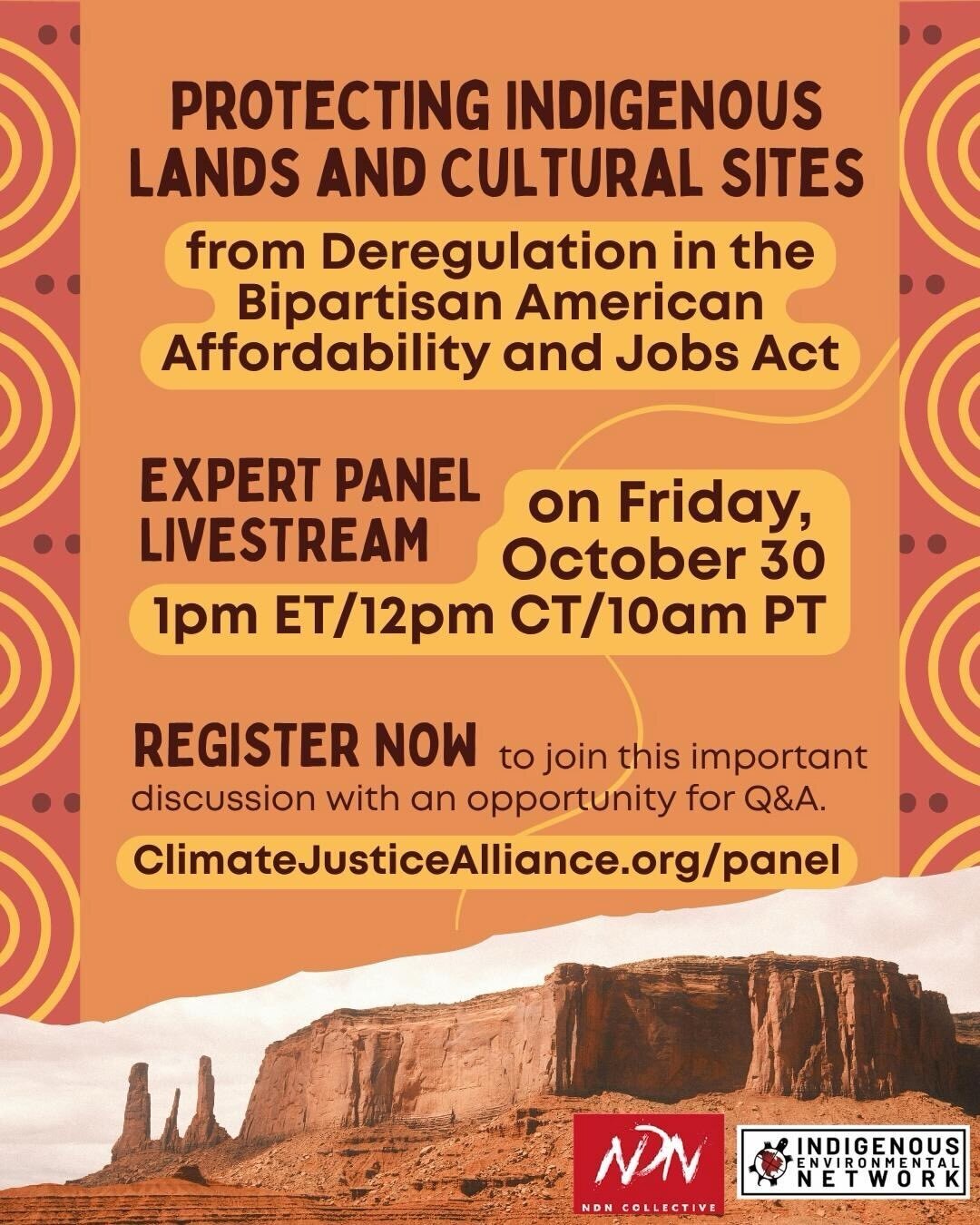
Protecting Indigenous Lands and Cultural Sites from Deregulation in the Bipartisan American Affordability and Jobs Act

Join the webinar on Friday, October 30 at 1pm ET/12pm CT/10am PT to hear from Tribal leaders and Federal Indian Policy experts about how the Bipartisan American Affordability and Jobs Act would undermine important government-to-government Tribal consultation practices, leave Tribal lands and waterways unprotected, and take away Tribal Nations’ right to protect sacred and cultural sites.

Presenters:

  • James Floyd, Board of Trustees for National Parks Conservation Association and former Principal Chief of the Muscogee Nation
  • Christie Modlin, Tribal Secretary for the Iowa Tribe of Oklahomas and Recording Secretary for National Congress of American Indians
  • Valerie Grussing, Director of Legislative Affairs and Strategic Partnerships at the National Asociation of Tribal Historic Preservation Officers

RSVP

Climate Justice Alliance
10/30/2026 at 01:00PM

Tags:

Stop the Dirty Deal: Take Action on the Proposed Bipartisan American Affordability and Jobs Act

Congress is considering major changes to federal permitting laws that could reshape how fossil fuel infrastructure, data centers, and other large projects are approved, and how much say communities have in those decisions.

​Join Climate Justice Alliance, Center for Biological Diversity, and AI Now Institute for an interactive session where we’ll break down the proposed Bipartisan American Affordability and Jobs Act (BAAJA) and provide easy ways to take immediate action.

​The session will be led by:

  • Mar Zepeda Salazar, Legislative Director, Climate Justice Alliance
  • Ben Goloff, Senior Climate Campaigner, Center for Biological Diversity
  • Sophie Song, Data Center Policy Fellow, AI Now Institute

​We’ll start with a short explanation of the proposed legislation and then move into an interactive, action-oriented session. The goal is to help people understand what’s in the bill, what it could mean for their communities, and what they can do to make their voices heard.

​Whether you have five minutes or an hour, we’ll share practical tools for contacting members of Congress, writing letters to the editor, creating social media messages, and organizing with others in your community.

​Read and Share the Permitting Bill Resource Document

​Come with your questions, your experiences, and a willingness to participate! We’ll provide resources, sample language, and opportunities to connect with others.

RSVP

Halt the Harm Network
10/29/2026 at 03:00PM

Tags: